Physical Address
304 North Cardinal St.
Dorchester Center, MA 02124
Physical Address
304 North Cardinal St.
Dorchester Center, MA 02124
This post contains affiliate links. As an Amazon Associate, I earn from qualifying purchases at no extra cost to you. All reviews are 100% unbiased and based on personal testing.
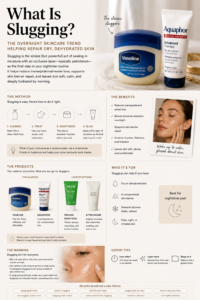
Slugging skincare may sound like another fleeting TikTok beauty trend, but its popularity comes from something surprisingly practical: protecting the skin barrier when winter skin feels dry, tight, and depleted. The method is simple—applying an occlusive layer, usually petrolatum-based products like Vaseline or Aquaphor, as the final step of an overnight skincare routine. Beneath the glazed-donut shine is a barrier-repair philosophy centered on moisture retention, overnight hydration, and reducing transepidermal water loss while you sleep.
The slugging routine itself is uncomplicated but intentional. Begin with cleansed skin, then continue with hydrating skincare products as usual—toners, serums, ceramide creams, or even active ingredients like retinol, if your skin tolerates them well. But slugging skincare works best when moisturizer comes first. Occlusives are not hydration on their own; instead, they act as a moisture seal, trapping humectants and nourishing ingredients close to the skin. Traditional sluggers like Vaseline remain classics for skin barrier repair, though lighter occlusive skincare options such as rich balms or barrier creams offer a gentler introduction for beginners curious about how to start slugging without feeling overwhelmed by heavy textures.
Still, slugging is not universally forgiving. Those with oily or acne-prone skin may find that intensive overnight occlusion feels too heavy, particularly when combined with exfoliating acids or strong retinoids. Questions like “Can slugging cause acne?” or “Can you slug with retinol?” ultimately depend on individual skin tolerance. For some, targeted slugging on dry patches works better than covering the entire face. At its best, slugging for dry skin is less about excess and more about comfort: a softer nighttime skincare ritual designed to support a compromised skin barrier, calm dehydrated skin, and leave the face looking quietly restored by morning.